Process & PracticeThe majority of my designs are created using an ancient technique called Lost Wax Casting. It’s a slow, meditative, almost magical process — one that has barely changed since it first appeared in archaeological records over 6,000 years ago.
Like the intricate gold jewellery of the Ancient Egyptians, the finely crafted brooches and pendants of the Vikings, and the wax ex votos of Southern Italy, offered in churches as acts of devotion or remembrance — each of my pieces begins life as a quiet sculpture in wax, a form slowly shaped by hand.
Crafting Folk Jewellery Through Wax & Stone
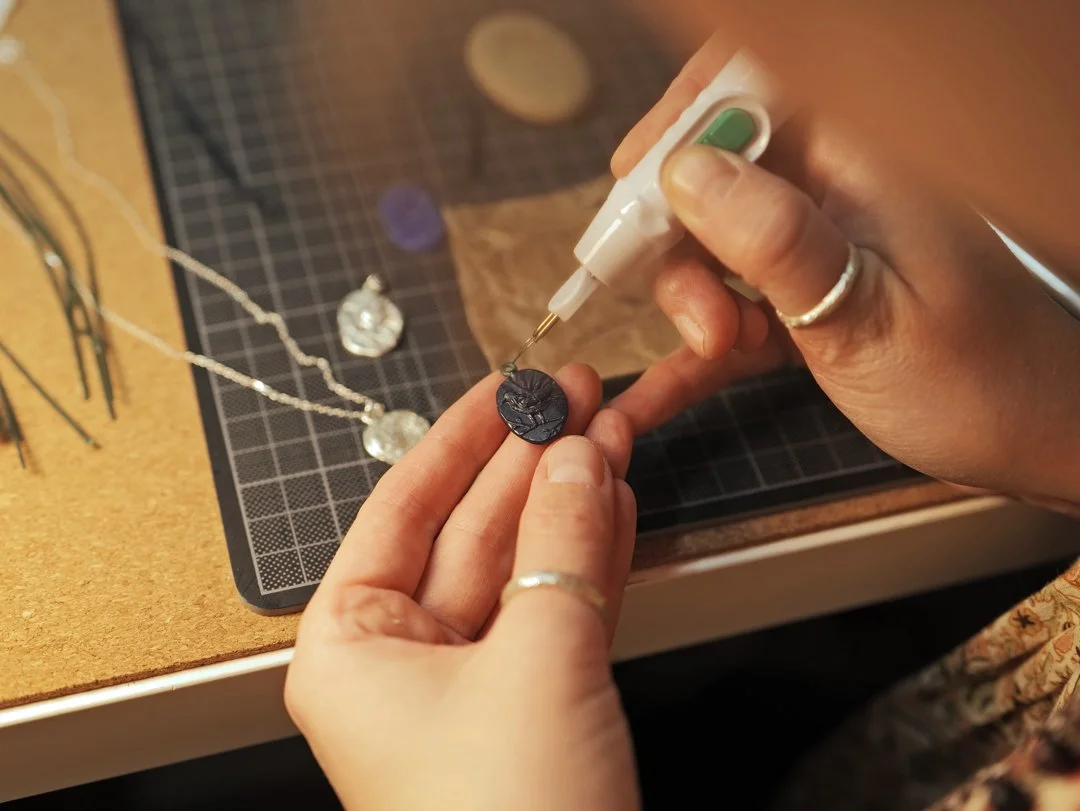
Wax is a material that seems to sit between states — fluid and solid, responsive yet fragile. It’s fast and receptive to intuition, easily awakened by the subtle warmth of one’s breath, and at the same time slow, delicate, and requiring patience. Historically used in votive offerings, especially in Southern Italian folk traditions, wax has long carried a quiet sense of devotion — a way to preserve memory, offer thanks, or ask for protection. I like to think of it as a vessel for all of these things, which is why I’m careful not to work with it in a bad mood — I’m quite sure it can soak that up too.
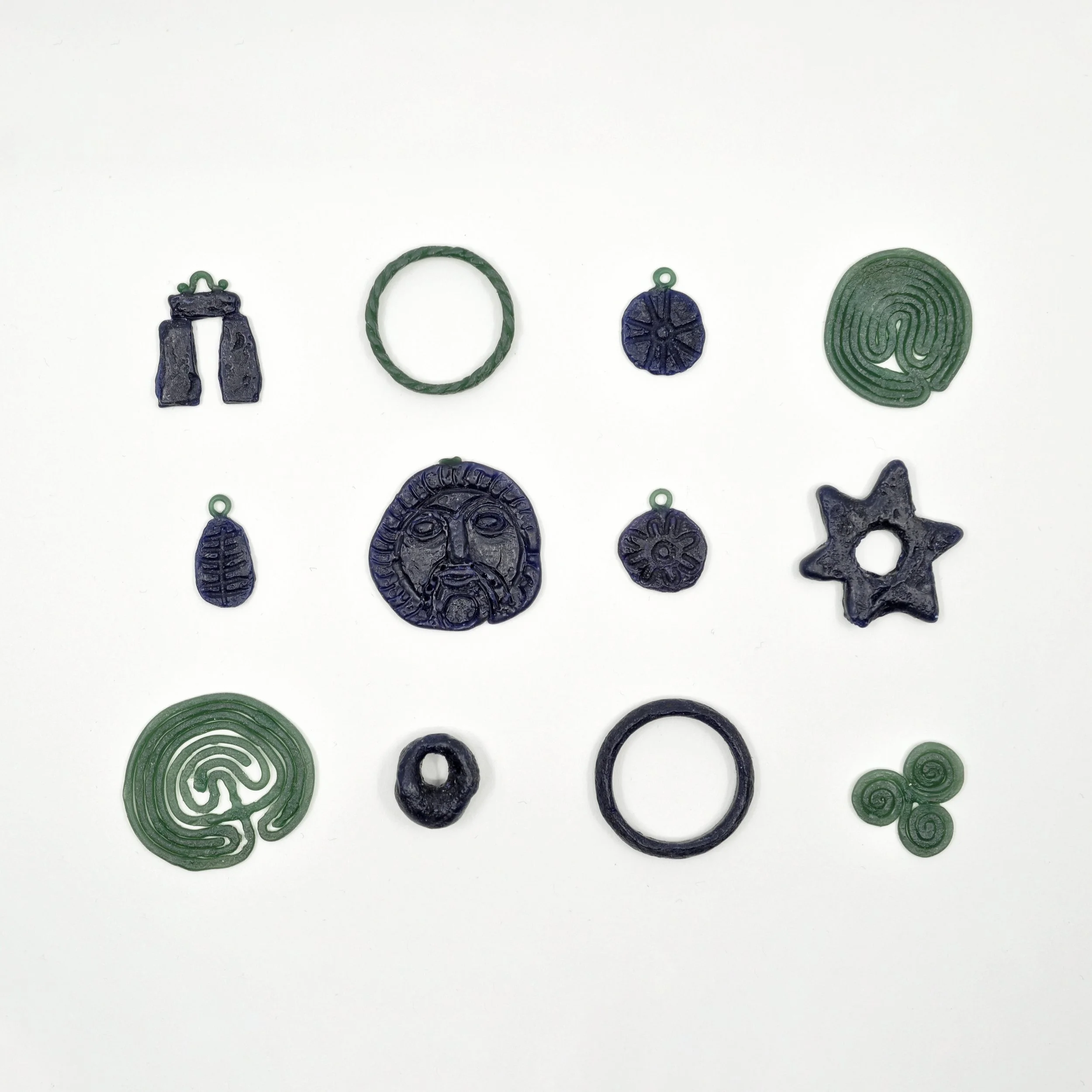
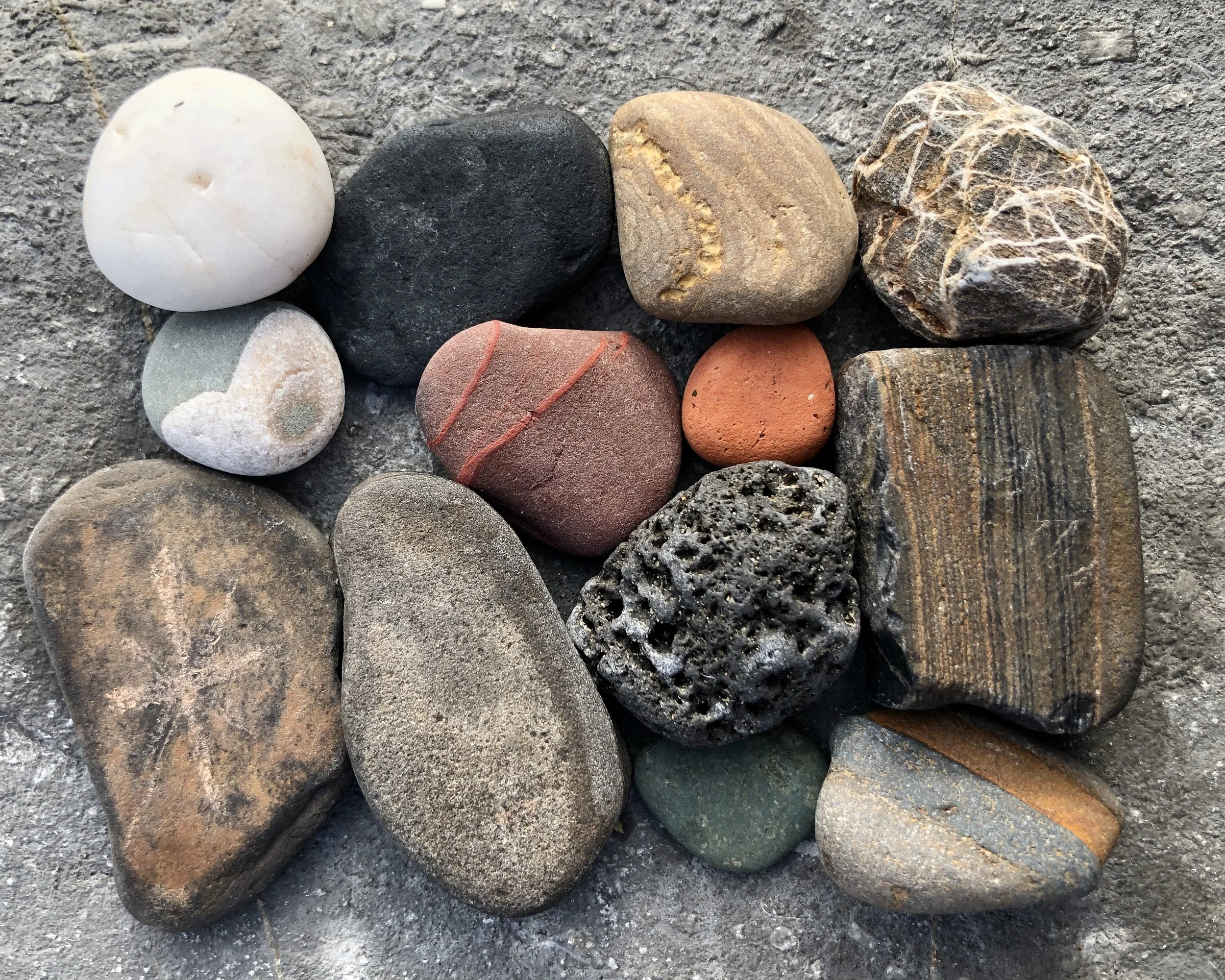
Similar to how our Neolithic ancestors carved into stone, I make my impressions in the wax by slowly scraping and cutting away material to create an intaglio effect and stones have become an integral part of this modelling process. I gather them, along with seashells, from the Irish coast and press them into the wax, imparting their textures — and, in turn, their stories. I have a whole collection of different stones – each one has its own special quality and use. They've become my modelling tools, and using them in this way feels like reconnecting with the past and embedding a bit of that forgotten landscape into each piece of jewellery.
The pebble beaches along the Irish coastline are an endless source of inspiration, and I never leave without a pocket full of pebbles. Choosing a stone means contemplating more than just its appearance or texture. I think about where each stone was found. Why I felt compelled to pick it up. How long it waited to be seen, and what stories it could tell. Who else has held it in their hands? What oceans has it rested beneath? Which mountains or ancient structures was it once part of?
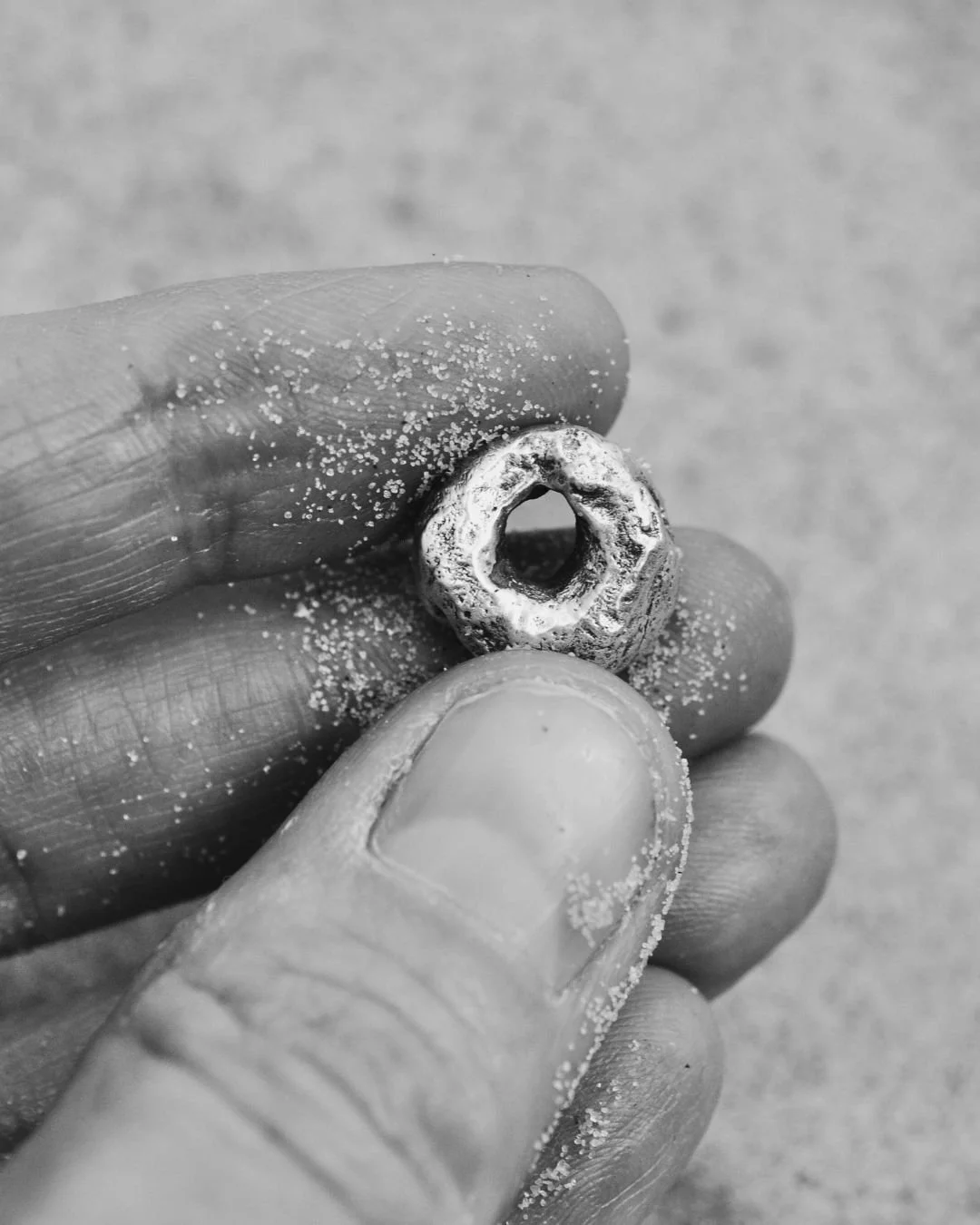
As the wise Barbara Hepworth wrote:
“Many people select a stone or a pebble to carry for the day. The weight and form and texture felt in our hands relates us to the past and gives us a sense of a universal force. The beautifully shaped stone, washed up by the sea, is a symbol of continuity, a silent image of our desire for survival, peace and security.”
When my delicate wax sculpture is ready, it’s used to create a mould before being melted away completely. What’s left behind is a hollow — the memory of the form — ready to be filled with molten metal and made permanent.
“Many people select a stone or a pebble to carry for the day. The weight and form and texture felt in our hands relates us to the past and gives us a sense of a universal force. The beautifully shaped stone, washed up by the sea, is a symbol of continuity, a silent image of our desire for survival, peace and security.”
– Barbara Hepworth
Behind the scenes– Studio Journal –